Lantingji Xu
Introduction
Lantingji Xu, also known as the Preface to the Collection of Poems Composed at the Orchid Pavilion, is a renowned piece of Chinese calligraphy from the fourth century. It was created by the esteemed calligrapher Wang Xizhi during a literati gathering in the year 353 AD, the ninth year of the Yonghe era of the Jin Dynasty. This masterpiece holds a special place in Chinese culture and is celebrated for both its literary and artistic values.
Historical Context and Creation
Lantingji Xu was written during a gathering of literati by a creek in what is now Shaoxing, Zhejiang province, China. The event was a traditional yaji, or gathering of intellectuals, where participants engaged in poetry, painting, and other cultural activities. During this gathering, attendees floated wine-filled cups down the river, and when a cup stopped before someone, they were to compose a poem or drink the wine. Wang Xizhi, who was the governor of the region at the time, wrote the preface improvisationally to a collection of poems created during the event. The narrative of the gathering and the text's philosophical musings on life and nature are captured within the preface's prose.
Calligraphy Style and Significance
The calligraphy in Lantingji Xu is executed in a semi-cursive style known as xingshu, or "running style," which balances between regular and cursive script. The piece consists of 324 characters arranged in 28 columns. Notably, the character "zhi" appears 21 times, each rendered uniquely, showcasing Wang Xizhi's calligraphic mastery. This work is often acclaimed as "the No 1 running-style calligraphy piece on earth" due to its exceptional aesthetic qualities and the fluidity of its strokes, which are likened to dance movements.
Cultural Impact and Legacy
Lantingji Xu not only reflects the aesthetic and philosophical values of the time but also lays the foundation for Chinese calligraphic art. The text's contemplative reflections on the transient nature of life and the pursuit of harmony between humanity and nature resonate deeply with Chinese cultural traditions. The calligraphy has inspired countless reproductions and studies over the centuries and continues to be a subject of admiration and scholarly interest worldwide.
Modern Interpretations and Performances
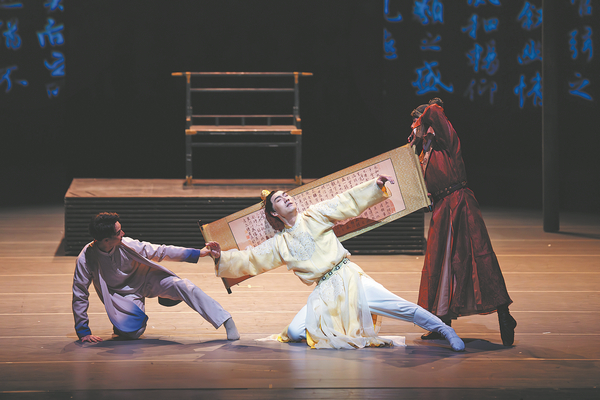
In contemporary times, Lantingji Xu has inspired various interpretations across different artistic mediums. In 2022, a full-length dance theater production titled In the Ninth Year in the Emperor Yonghe, choreographed by Wang Yabin, was developed by the Shanghai Opera House. This production merges classical Chinese dance with modern dance elements to express the creation, inheritance, and legends surrounding Lantingji Xu. The dance drama seeks to convey the aesthetics and spiritual essence of Wang Xizhi's masterpiece to a modern audience, integrating multimedia technology to enhance the visual storytelling.
Exhibition and Cultural Revival
Lantingji Xu continues to inspire cultural revivals and exhibitions, emphasizing the enduring legacy of Wang Xizhi's work. Artifacts such as porcelain scrolls of the preface are included in displays, highlighting the intricate craftsmanship and historical significance. These exhibitions celebrate the fusion of traditional and modern expressions of Chinese culture, bringing renewed attention to the timeless elegance of calligraphy.
Through these artistic endeavors and scholarly explorations, Lantingji Xu remains a vital cultural touchstone, demonstrating the profound impact of calligraphy on Chinese art and literature. Wang Xizhi's creation transcends time, embodying the harmonious blend of intellectual, artistic, and spiritual pursuits that continue to inspire both artists and audiences around the world.








